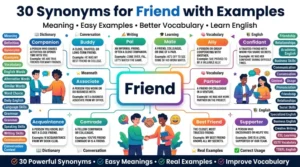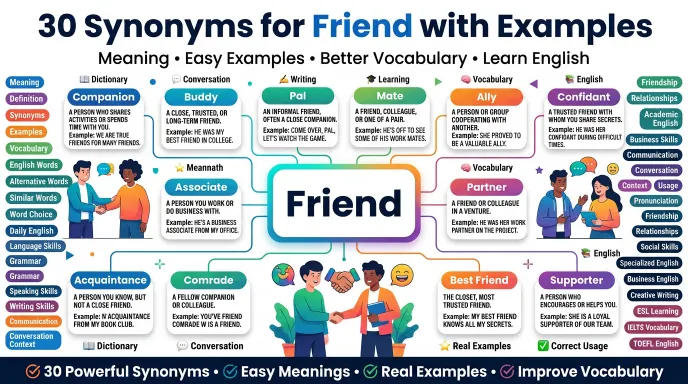
Friend is a person you know well, trust, and enjoy spending time with, and words like companion, buddy, pal, mate, and ally are common synonyms used in different situations.
We use the word “friend” so often that our writing and speech can start to feel repetitive. Saying “my friend” in every sentence gets boring fast.
That’s where synonyms help. They add color to your writing, show your true feeling toward someone, and help you sound more natural in English.
In this article, you’ll learn 30 useful synonyms for “friend,” their exact meanings, how formal or casual each one is, and how to use them correctly in real sentences.
Quick Answer
Synonyms for “friend” include companion, buddy, pal, mate, comrade, confidant, ally, and acquaintance.
Each word carries a different tone some are casual (buddy, pal), some are formal (associate, colleague), and some describe a deep bond (confidant, soulmate).
Quick Reference Table
| Keyword | Part of Speech | Meaning | Tone |
| Friend | Noun | A person you know well and like | Neutral / Warm |
Meaning of Friend
Definition
According to Oxford Dictionary, a friend is a person with whom one shares a bond of mutual affection, typically separate from family or romantic ties.
Examples
- She has been my best friend since we were seven years old.
- He made a new friend on his first day at work.
Connotative Meaning
Connotation is the feeling or idea a word suggests, beyond its dictionary meaning.
- Positive: “Friend” usually feels warm, safe, and comforting.
- Negative: Rarely negative, though “fair-weather friend” implies someone unreliable.
- Neutral: In formal writing, “friend” can simply describe a known contact without emotional weight.
Pronunciation
- US IPA: /frɛnd/
- UK IPA: /frɛnd/
- Syllables: 1 (friend)
Etymology
The word comes from Old English frēond, meaning “one who loves.” It is related to the verb frēon, “to love” or “to favor.”
- Old English: frēond a lover, kinsman, or ally.
- Middle English: frend broadened to mean someone bonded by affection, not just family.
- Modern English: friend a person you know and like, outside family or romance.
Word Formation
- Root: freon (Old English, “to love”)
- Prefix: None
- Suffix: -ship (forms “friendship”)
- Derived Words:
- Friendship (noun)
- Friendly (adjective)
- Friendless (adjective)
- Befriend (verb)
30 Synonyms of Friend
1. Companion (Noun)
- US IPA: /kəmˈpæn.jən/
- UK IPA: /kəmˈpæn.jən/
- Meaning: A person who spends time with you, often on a journey or activity.
- Usage Label: Neutral / Literary
- Frequency: ★★★★
- Examples:
- My dog is my constant companion on morning walks.
- She traveled through Europe with a close companion.
2. Buddy (Noun)
- US IPA: /ˈbʌd.i/
- UK IPA: /ˈbʌd.i/
- Meaning: A casual, friendly term for a close friend.
- Usage Label: Informal
- Frequency: ★★★★★
- Examples:
- He’s my gym buddy; we work out every morning.
- Hey buddy, want to grab lunch later?
3. Pal (Noun)
- US IPA: /pæl/
- UK IPA: /pæl/
- Meaning: An informal word for a friend, often used casually.
- Usage Label: Informal
- Frequency: ★★★★
- Examples:
- We’ve been pals since elementary school.
- Thanks for the help, pal.
4. Mate (Noun)
- US IPA: /meɪt/
- UK IPA: /meɪt/
- Meaning: A close friend, especially common in British and Australian English.
- Usage Label: Informal (British/Australian)
- Frequency: ★★★★
- Examples:
- I’m meeting my mate for a pint tonight.
- He’s a good mate of mine from university.
5. Comrade (Noun)
- US IPA: /ˈkɒm.ræd/
- UK IPA: /ˈkɒm.reɪd/
- Meaning: A friend or companion, especially one who shares hardship or struggle.
- Usage Label: Formal / Literary
- Frequency: ★★★
- Examples:
- The soldiers stood by their comrades until the end.
- She called her fellow activists comrades.
6. Acquaintance (Noun)
- US IPA: /əˈkweɪn.təns/
- UK IPA: /əˈkweɪn.təns/
- Meaning: Someone you know but not closely; less than a true friend.
- Usage Label: Formal / Neutral
- Frequency: ★★★★
- Examples:
- He’s more of an acquaintance than a close friend.
- I made several acquaintances at the conference.
7. Confidant (Noun)
- US IPA: /ˈkɒn.fɪ.dænt/
- UK IPA: /ˈkɒn.fɪ.dɑːnt/
- Meaning: A person you trust with your private thoughts and secrets.
- Usage Label: Formal
- Frequency: ★★★
- Examples:
- She’s my confidant; I tell her everything.
- He became a trusted confidant to the CEO.
8. Ally (Noun)
- US IPA: /ˈæl.aɪ/
- UK IPA: /ˈæl.aɪ/
- Meaning: A friend who supports and helps you, especially in a conflict or cause.
- Usage Label: Formal / Business
- Frequency: ★★★
- Examples:
- She found an ally in her new coworker.
- The two countries became close allies.
9. Chum (Noun)
- US IPA: /tʃʌm/
- UK IPA: /tʃʌm/
- Meaning: An old-fashioned, friendly term for a close friend.
- Usage Label: Informal / Dated
- Frequency: ★★
- Examples:
- We were chums back in school.
- He greeted his old chum with a warm hug.
10. Crony (Noun)
- US IPA: /ˈkroʊ.ni/
- UK IPA: /ˈkrəʊ.ni/
- Meaning: A close friend, often used with a slightly negative or joking tone.
- Usage Label: Informal / Slightly Negative
- Frequency: ★★
- Examples:
- He and his cronies went out every Friday night.
- The manager was accused of hiring his cronies.
11. Sidekick (Noun)
- US IPA: /ˈsaɪd.kɪk/
- UK IPA: /ˈsaɪd.kɪk/
- Meaning: A close companion who supports or assists someone, often a junior partner.
- Usage Label: Informal
- Frequency: ★★★
- Examples:
- Every hero needs a loyal sidekick.
- She’s his sidekick on all his adventures.
12. Associate (Noun)
- US IPA: /əˈsoʊ.si.ət/
- UK IPA: /əˈsəʊ.si.ət/
- Meaning: A person connected through work or shared activity, not necessarily close.
- Usage Label: Formal / Business
- Frequency: ★★★
- Examples:
- He introduced her as a business associate.
- They remained associates long after the project ended.
13. Colleague (Noun)
- US IPA: /ˈkɒl.iːɡ/
- UK IPA: /ˈkɒl.iːɡ/
- Meaning: A person you work with, often on friendly terms.
- Usage Label: Formal / Business
- Frequency: ★★★★
- Examples:
- My colleague helped me finish the report on time.
- She invited her colleagues to the party.
14. Playmate (Noun)
- US IPA: /ˈpleɪ.meɪt/
- UK IPA: /ˈpleɪ.meɪt/
- Meaning: A friend, usually a child, that one plays with.
- Usage Label: Everyday English
- Frequency: ★★
- Examples:
- The two kids became playmates at the park.
- Her childhood playmate still lives next door.
15. Intimate (Noun)
- US IPA: /ˈɪn.tɪ.mət/
- UK IPA: /ˈɪn.tɪ.mət/
- Meaning: A very close, trusted friend.
- Usage Label: Formal / Literary
- Frequency: ★★
- Examples:
- Only her closest intimates knew the truth.
- He was one of the author’s few intimates.
16. Amigo (Noun)
- US IPA: /əˈmiː.ɡoʊ/
- UK IPA: /əˈmiː.ɡəʊ/
- Meaning: A friend, borrowed from Spanish, used casually in English.
- Usage Label: Informal
- Frequency: ★★
- Examples:
- Come on in, amigo!
- He traveled with his amigos through Mexico.
17. Homie (Noun)
- US IPA: /ˈhoʊ.mi/
- UK IPA: /ˈhəʊ.mi/
- Meaning: A very close friend, often from one’s neighborhood, used in casual slang.
- Usage Label: Informal / Slang
- Frequency: ★★★
- Examples:
- He’s been my homie since third grade.
- What’s up, homie?
18. Bestie (Noun)
- US IPA: /ˈbɛs.ti/
- UK IPA: /ˈbɛs.ti/
- Meaning: A best friend; a very casual, modern term.
- Usage Label: Informal / Slang
- Frequency: ★★★★
- Examples:
- She’s my bestie, we tell each other everything.
- Happy birthday to my bestie!
19. Partner (Noun)
- US IPA: /ˈpɑːrt.nər/
- UK IPA: /ˈpɑːt.nə/
- Meaning: A person who works or acts alongside someone, often in a task.
- Usage Label: Neutral / Business
- Frequency: ★★★★
- Examples:
- He’s my partner for the science project.
- They’ve been business partners for ten years.
20. Well-Wisher (Noun)
- US IPA: /ˈwɛl.wɪʃ.ər/
- UK IPA: /ˈwɛl.wɪʃ.ə/
- Meaning: A person who wishes another person success and happiness.
- Usage Label: Formal
- Frequency: ★★
- Examples:
- Crowds of well-wishers gathered outside the hospital.
- Thank you to all our well-wishers for the support.
21. Kindred Spirit (Noun)
- US IPA: /ˈkɪn.drɪd ˈspɪr.ɪt/
- UK IPA: /ˈkɪn.drɪd ˈspɪr.ɪt/
- Meaning: A person who shares your beliefs, interests, or feelings closely.
- Usage Label: Literary
- Frequency: ★★
- Examples:
- She finally found a kindred spirit in her book club.
- The two writers recognized each other as kindred spirits.
22. Familiar (Noun)
- US IPA: /fəˈmɪl.jər/
- UK IPA: /fəˈmɪl.jə/
- Meaning: A close friend or associate, in an older or literary sense.
- Usage Label: Literary / Rare
- Frequency: ★
- Examples:
- He was a familiar of the royal court.
- Few could call themselves familiars of the reclusive artist.
23. Soulmate (Noun)
- US IPA: /ˈsoʊl.meɪt/
- UK IPA: /ˈsəʊl.meɪt/
- Meaning: A person who understands you deeply, as if made for you.
- Usage Label: Emotional / Everyday English
- Frequency: ★★★
- Examples:
- They met in college and became soulmates.
- She calls her best friend her soulmate, not just a friend.
24. Confrere (Noun)
- US IPA: /ˈkɒn.frɛr/
- UK IPA: /ˈkɒn.frɛə/
- Meaning: A fellow member of a profession or group, treated as a friend.
- Usage Label: Formal / Academic
- Frequency: ★
- Examples:
- He greeted his medical confreres at the conference.
- The professor discussed the paper with her confreres.
25. Compadre (Noun)
- US IPA: /kəmˈpɑː.dreɪ/
- UK IPA: /kəmˈpɑː.dreɪ/
- Meaning: A close friend or companion, borrowed from Spanish.
- Usage Label: Informal (US Regional)
- Frequency: ★★
- Examples:
- He’s my compadre from the old neighborhood.
- Good to see you again, compadre.
26. Cobber (Noun)
- US IPA: /ˈkɒb.ər/
- UK IPA: /ˈkɒb.ə/
- Meaning: An Australian informal word for a close friend.
- Usage Label: Informal (Australian)
- Frequency: ★
- Examples:
- G’day, cobber, how’s it going?
- He’s a true cobber; he’s always there for you.
27. Bosom Buddy (Noun)
- US IPA: /ˈbʊz.əm ˈbʌd.i/
- UK IPA: /ˈbʊz.əm ˈbʌd.i/
- Meaning: A very close, trusted friend.
- Usage Label: Informal
- Frequency: ★★
- Examples:
- They’ve been bosom buddies since preschool.
- She’s more than a friend she’s a bosom buddy.
28. Fellow (Noun)
- US IPA: /ˈfɛl.oʊ/
- UK IPA: /ˈfɛl.əʊ/
- Meaning: A companion or associate, especially one sharing the same experience.
- Usage Label: Formal / Literary
- Frequency: ★★
- Examples:
- He shared the story with his fellow travelers.
- They were fellows in the same academic program.
29. Comrade-in-Arms (Noun)
- US IPA: /ˈkɒm.ræd ɪn ɑːrmz/
- UK IPA: /ˈkɒm.reɪd ɪn ɑːmz/
- Meaning: A close friend, especially one who has shared a difficult struggle or fight.
- Usage Label: Formal / Literary
- Frequency: ★
- Examples:
- The veterans remained comrades-in-arms for life.
- She thanked her comrades-in-arms for their loyalty.
30. Mucker (Noun)
- US IPA: /ˈmʌk.ər/
- UK IPA: /ˈmʌk.ə/
- Meaning: A dated British informal word for a close friend.
- Usage Label: Informal / Dated (British)
- Frequency: ★
- Examples:
- He was my old mucker from the army days.
- Come on then, mucker, let’s go.
Prototype Meaning
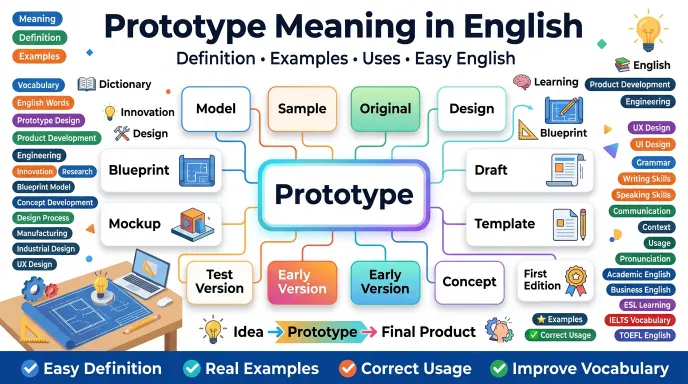
When most people hear “friend,” they picture the most typical case: a companion someone close, trusted, and enjoyable to be around, without romantic or family ties. Words like buddy, pal, and mate sit closest to this core meaning.
Words like confidant or soulmate describe a deeper version of it, while acquaintance or associate describe a weaker version.
Semantic Categories
| Category | Synonyms | When to Use |
| Formal | Acquaintance, Confidant, Ally, Confrere, Fellow | Reports, essays, professional writing |
| Informal | Buddy, Pal, Mate, Chum, Homie, Bestie | Texting, casual chat, storytelling |
| Academic | Confrere, Associate, Colleague | Research papers, professional contexts |
| Business | Partner, Associate, Colleague, Ally | Workplace communication |
| Everyday English | Companion, Playmate, Soulmate | General conversation |
| Emotional | Confidant, Soulmate, Kindred Spirit, Intimate | Personal, heartfelt writing |
| Regional Slang | Cobber, Mucker, Compadre, Homie | Informal speech tied to a region or culture |
Difference Between Similar Words
Friend vs. Acquaintance A friend is someone you trust and care about. An acquaintance is someone you simply know, without a strong bond.
- I trust my friend with my secrets.
- He’s just an acquaintance from my building.
Friend vs. Colleague A friend is chosen freely, based on personal connection. A colleague is connected through work, not necessarily friendship.
- My friend and I share the same hobbies.
- My colleague and I work on the same team.
Buddy vs. Confidant “Buddy” describes a casual, easygoing friend. “Confidant” describes someone you trust with private information.
- He’s my gym buddy; we just talk about workouts.
- She’s my confidant; I share my deepest worries with her.
Ally vs. Friend An ally supports you in a specific cause or conflict. A friend supports you generally, in everyday life.
- She became a strong ally during the negotiation.
- My friend supports me no matter what happens.
Common Mistakes
Mistake: Using “colleague” to describe a personal friend. Correct: Use “colleague” only for someone you work with.
- ❌ My colleague and I grew up together.
- ✅ My friend and I grew up together.
Mistake: Using “acquaintance” for someone very close. Correct: “Acquaintance” means a weak connection, not a close one.
- ❌ She’s my acquaintance; we tell each other everything.
- ✅ She’s my confidant; we tell each other everything.
Mistake: Overusing slang terms like “homie” or “bestie” in formal writing. Correct: Use neutral or formal synonyms in professional contexts.
- ❌ My homie helped me prepare the business report.
- ✅ My colleague helped me prepare the business report.
Antonyms
| Word | Part of Speech | Meaning |
| Enemy | Noun | A person who is hostile toward you |
| Stranger | Noun | A person you do not know |
| Foe | Noun | An enemy, especially in conflict |
| Rival | Noun | A person competing against you |
| Opponent | Noun | A person on the opposite side in a contest or argument |
Related Words
- Friendship (noun) the state of being friends
- Friendly (adjective) kind and warm toward others
- Befriend (verb) to become someone’s friend
- Friendliness (noun) the quality of being warm and welcoming
- Unfriendly (adjective) not kind or welcoming
Related Synonym Pages
- Synonyms of Happy
- Synonyms of Kind
- Synonyms of Trust
- Synonyms of Family
- Synonyms of Support
Frequently Asked Questions
1. What is the most common synonym for “friend”? “Buddy” and “pal” are among the most commonly used casual synonyms, while “companion” is common in neutral or written English.
2. What is a formal word for “friend”? “Acquaintance,” “confidant,” and “ally” are more formal alternatives, depending on the level of closeness you want to express.
3. What is the British slang word for “friend”? “Mate” is the most common British and Australian informal word for a friend, along with “cobber” in Australian English.
4. Is “acquaintance” the same as “friend”? No. An acquaintance is someone you know casually, while a friend is someone you trust and feel close to.
5. What’s a deeper word than “friend”? “Confidant” and “soulmate” describe closer, more emotional bonds than a regular friend.
6. Can “partner” mean “friend”? Yes, in some contexts, “partner” describes someone you work or act closely with, though it often implies teamwork rather than personal closeness.
7. What’s a one-word synonym for “best friend”? “Bestie” is the most common single-word informal synonym for “best friend.”
8. Why should I use synonyms instead of repeating “friend”? Synonyms make writing more interesting, show the exact type of relationship, and help avoid repetition in essays, stories, and conversations.
Practice Exercises
A. Fill in the Blanks
- She has been my closest _______ since childhood. (companion / stranger)
- He’s just an _______, not a close friend. (acquaintance / soulmate)
- My _______ helped me finish the project at work. (colleague / cobber)
B. Multiple Choice
- Which word means “a very close, trusted friend”? a) Acquaintance b) Confidant c) Stranger d) Rival
- Which word is common British/Australian slang for “friend”? a) Colleague b) Mate c) Associate d) Fellow
C. Match the Synonyms Match each word on the left with its correct meaning on the right.
| Word | Meaning |
| 1. Ally | a) A friend from work |
| 2. Bestie | b) A supporter in a cause |
| 3. Colleague | c) A best friend |
Conclusion
Learning synonyms for “friend” helps you describe relationships more clearly and precisely. Instead of repeating the same word, you can choose “companion” for a travel partner, “confidant” for someone you trust deeply, or “colleague” for someone from work. This makes your writing richer and your speech more natural.
Practice using a few new synonyms each week. Try them in sentences, conversations, or short writing exercises. Over time, this small habit will improve your vocabulary, your writing style, and how confidently you speak English.
Which synonym from this list is your favorite? Try using it in a sentence today.
DiscoverMore Articles!
Powerful Synonyms for Big in English You Should Know
50+ Synonyms for Slow with Meanings and Examples
30+ Synonyms of Bad Relationship with Meanings and Examples

My name is Sophia Bennett a language researcher and vocabulary writer specializing in synonyms, antonyms, word meanings, and language learning. I creates easy-to-understand educational content that helps readers improve their vocabulary, writing skills, and communication through clear explanations and practical examples.